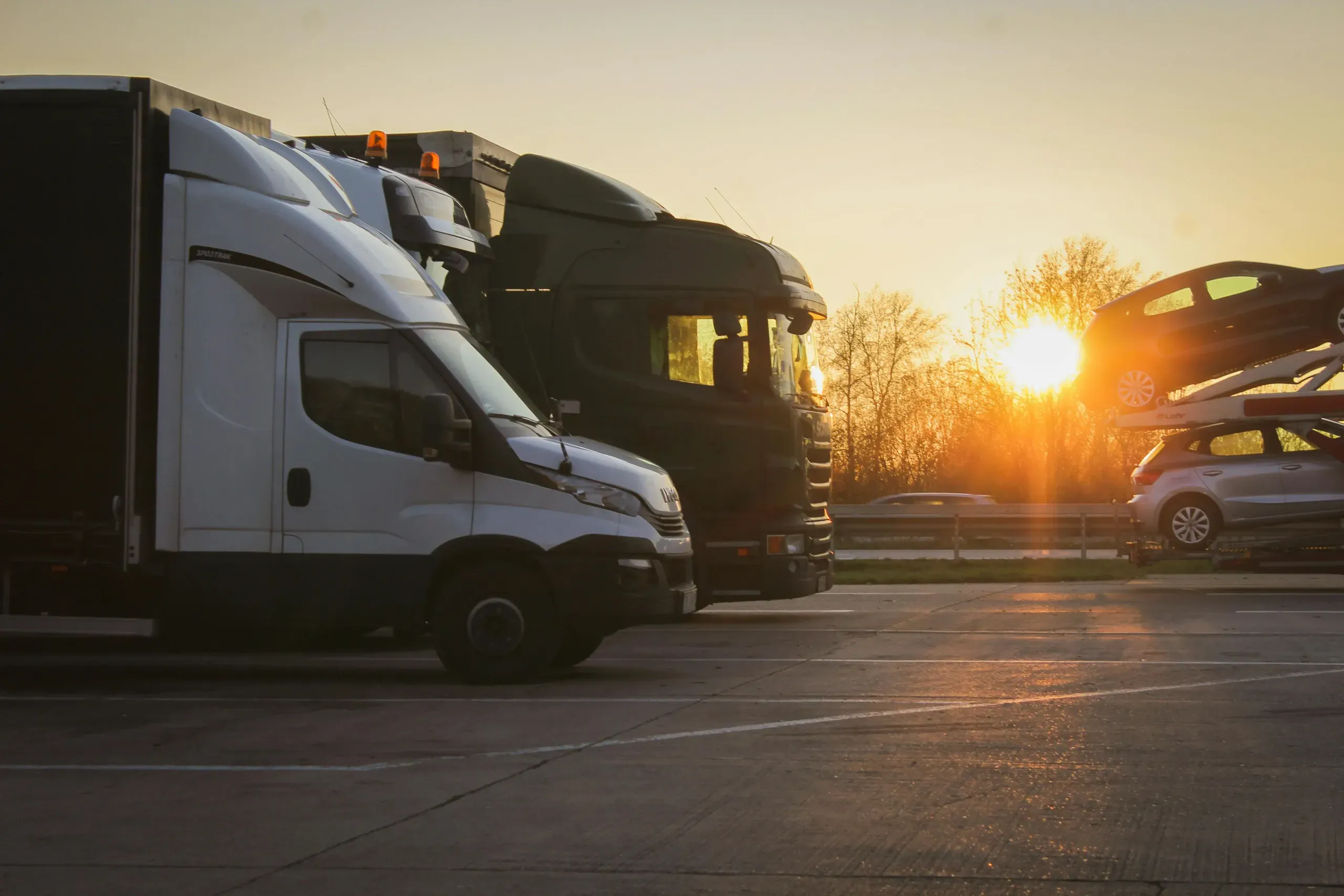
Ship Car from Kansas to Virginia
Shipping a vehicle from Kansas to Virginia covers approximately 1,233 miles, with a typical carrier transit time of three to five days. This route primarily utilizes I-70 East and I-64 East, connecting the heart of the Midwest to the Atlantic coast. Whether you are relocating for work, buying a car online, or coordinating a family move, we provide the essential details you need to manage your shipment. This page covers everything from transport costs and scheduling to vehicle preparation, carrier verification, and answers to the most common questions about the process.
- No-obligation quote within 2 minutes
- Price all-inclusive
- No charge until driver confirmed
- Distance
- 1,233 mi
- Transit time
- 3–5 days
- Open carrier from
- $1,375
How much does it cost to ship a car from Kansas to Virginia?
For a 1,233-mile trip from Kansas to Virginia, you can typically expect to pay between $1,375 and $1,850 for open transport, or $2,650 to $3,525 for enclosed service, with transit usually taking three to five days. As a referral service, Ship Car Pros connects you with vetted, independent carriers who bid on your specific route. Because carrier availability and fuel demand fluctuate daily, your final rate depends on several key variables. There are six primary factors that determine where your final price lands, including your vehicle's size, its operability, and your desired pickup window. By understanding how these elements interact, you can better manage your budget and ensure your vehicle is matched with the right driver for your timeline.
What factors affect car shipping cost?
Several variables influence your final rate beyond just the base mileage. Here is how these factors shape the pricing for your move from Kansas to Virginia:
- Vehicle dimensions and weight: Larger trucks and SUVs consume more trailer space and increase fuel costs.
- Transport type: Selecting enclosed trailers provides premium protection but comes at a higher price point than standard open carriers.
- Pickup and delivery flexibility: A wider scheduling window allows carriers to optimize their routes, often reducing your total cost.
- Seasonal demand: Peak periods like summer or the winter holidays tighten driver availability and push rates upward.
- Route accessibility: Picking up or dropping off in remote, rural areas requires more time and fuel than frequenting major metro hubs.
- Vehicle operability: Vehicles that cannot start or roll require specialized equipment for loading, which increases the complexity and cost of the job.
Open vs. enclosed car transport: which should you choose?
Choosing between open and enclosed transport depends largely on your vehicle’s value and your specific protection needs. Open transport is the industry standard, used for about 85% of all shipments. It is the same method dealers use to move new inventory from factories to showrooms. With a typical cost around $1,541 for this Kansas to Virginia route, it is the most efficient choice for daily drivers, standard SUVs, and commuter vehicles.
Enclosed transport provides a fully sealed environment, shielding your car from road debris, dust, and weather elements. While it carries a typical price of $2,947, this premium service is the smart choice for high-value luxury cars, rare collector pieces, or vintage models. If you have a custom vehicle with low ground clearance or a classic car that must arrive in showroom condition, the added layer of security is worth the investment.
- Open carrier
- $1,375–$1,850
- Standard 7–10 car hauler.
- Enclosed carrier
- $2,650–$3,525
- Sealed trailer for high-value vehicles.
How long does it take to ship a car from Kansas to Virginia?
Shipping your vehicle the 1,233 miles from Kansas to Virginia generally takes three to five days once the driver is on the road. While it might seem like a quick trip, carriers typically cover about 400 to 500 miles per day. This pace accounts for the time spent navigating traffic, refueling, and adhering to strict federal driving limits that require drivers to take regular rest breaks. Keep in mind that this window represents time in transit, not the total time from booking to delivery. Several external factors, including regional weather conditions and carrier availability, can influence the exact arrival date of your vehicle.
Which routes do carriers usually take?
Carriers typically follow a direct path connecting the Midwest to the Atlantic coast. The journey begins on I-70 E, which serves as the primary artery for exiting the Kansas City metro area. As the route transitions eastward through the rolling terrain of the Midwest, drivers eventually merge onto I-64 E. This interstate provides a consistent corridor through the Appalachians, navigating mountain passes like Afton Mountain before reaching the coastal regions of Virginia. While urban congestion in hubs like Kansas City or Richmond can occasionally slow progress, this interstate-focused route remains the most efficient way to maintain a steady, reliable pace across the country.
What can delay your shipment?
While your vehicle follows a direct path along I-70 and I-64, several factors can influence the timeline. Winter weather is the primary challenge; carriers must navigate mountain passes like Afton Mountain in Virginia, where sudden fog or freezing precipitation can trigger temporary highway slowdowns or closures. Similarly, spring and summer storms across the Midwest can cause localized delays. Scheduling also plays a role, as weekend pickups are less reliable than weekday slots, and holiday periods often reduce carrier availability. Finally, if you are sourcing a vehicle from an auction, missing or incomplete documentation-such as a gate pin or lot number-will keep your shipment at a standstill until the paperwork is resolved.
Popular Routes
Major city-to-city routes on the Kansas → Virginia corridor.
| From | To | Approx. distance | Transit |
|---|---|---|---|
| Wichita, KS | Virginia Beach, VA | ~1,170 mi | 4-6 days |
| Overland Park, KS | Richmond, VA | ~940 mi | 3-5 days |
| Kansas City, KS | Chesapeake, VA | ~1,020 mi | 4-6 days |
| Topeka, KS | Norfolk, VA | ~1,070 mi | 4-6 days |
| Olathe, KS | Roanoke, VA | ~810 mi | 3-5 days |
| Oaklawn-Sunview, KS | Newport News, VA | ~1,140 mi | 4-6 days |
| Lawrence, KS | Fredericksburg, VA | ~960 mi | 3-5 days |
| Shawnee, KS | Alexandria, VA | ~950 mi | 3-5 days |
| Lenexa, KS | Hampton, VA | ~1,010 mi | 4-6 days |
| Manhattan, KS | Lynchburg, VA | ~950 mi | 3-5 days |
How does shipping a car from Kansas to Virginia work?
Shipping a vehicle from Kansas to Virginia follows a straightforward three-stage process: you request a quote, a carrier collects your vehicle, and the driver delivers it to your destination. First, we gather your route and vehicle details to connect you with a qualified carrier from our network. Once you confirm, the driver coordinates a pickup window to load your car. Finally, the carrier transports your vehicle along the I-70 and I-64 corridor, performing an inspection at delivery. We handle the logistics so you can focus on the other details of your move.
What happens between booking and pickup?
Once you confirm your booking, the period between scheduling and pickup involves a series of coordinated steps to get your vehicle on the road.
- We post your shipment to our private network, where vetted carriers review the route and load details.
- An available carrier accepts the job, and our dispatch team officially assigns the load to their truck.
- You receive a notification containing your carrier’s information, including the driver's name, phone number, and estimated arrival window.
- The driver contacts you directly to confirm the specific pickup date and address details.
- On the scheduled day, the driver arrives to perform a thorough bumper-to-bumper inspection, documenting the vehicle's condition on the bill of lading before loading it onto the trailer.
This window typically lasts one to three days for standard bookings, though providing a flexible four-to-seven-day range can often speed up the matching process by giving carriers more options to integrate your vehicle into their existing route.
What is a bill of lading (BOL)?
The bill of lading (BOL) acts as both your official transport contract and a detailed condition report for your vehicle. At pickup, the driver performs a thorough 21-point inspection, documenting the car's exterior and interior, including any existing dents or scratches. Both you and the driver sign this document before the car is loaded. When the vehicle reaches its destination, you will repeat this inspection process side-by-side with the driver. Always perform this final check in broad daylight and compare it closely against the original report. Once you sign the second BOL, it confirms the vehicle’s condition upon delivery, so verify everything carefully before providing your signature.
After delivery: registration and inspection in Virginia
Once your vehicle arrives in Virginia, you have 30 days to title and register it with the Virginia DMV. As a new resident, you must also transfer your driver’s license within 60 days. To complete your registration, you will need to provide proof of residency, your out-of-state title, and proof of purchase. Crucially, every out-of-state vehicle must pass a Virginia safety inspection before it can be registered-out-of-state stickers are not recognized. If you reside in specific Northern Virginia counties or cities, you may also need an emissions inspection. Be prepared for a 4.15% sales and use tax, though this is often waived if you have owned the vehicle for more than 12 months.
Before wrapping up, remember to finalize your Kansas paperwork. If you wish to claim a prorated refund on your Kansas registration fees or property taxes, you must return your physical Kansas license plates and decals to your local County Treasurer’s office.
How do you verify a car transport company is legitimate?
Legitimate auto transport companies operate under clear, federally mandated standards. The most important step in verifying a provider is confirming their credentials through the Federal Motor Carrier Safety Administration (FMCSA). Every reputable carrier or broker must hold an active Motor Carrier (MC) number and a Department of Transportation (DOT) number. You can enter these numbers into the FMCSA’s official "Company Snapshot" tool to verify they are authorized to transport vehicles and carry the required insurance. If a company cannot provide these numbers, or if their license status shows as "inactive" or "revoked," move on to another provider.
Beyond federal registration, look for transparency in their business practices. A legitimate service will always provide a written agreement or contract for your signature before any work begins. Be wary of any company that asks for payment or a deposit before a carrier has been officially assigned to your vehicle. This is a common red flag; your card should only be charged once a driver is confirmed to pick up your car. Finally, cross-reference the company’s reputation using independent third-party sources like the Better Business Bureau (BBB) or Transport Reviews. These platforms offer unfiltered feedback from past customers, which provides a much clearer picture of a company’s reliability than their own marketing materials.
How do I prepare my car for shipping?
Getting your vehicle ready for transport ensures a smooth experience and helps the driver manage your car safely. Following these steps helps protect your vehicle and streamlines the inspection process at pickup:
- Wash the exterior: Cleaning your car allows you and the driver to clearly identify and document any pre-existing scratches or dents.
- Photograph the vehicle: Take clear, dated photos from every angle, including the roof and tires, to serve as an accurate record of your car's condition.
- Remove personal items: Clear out all loose belongings, including toll tags, parking passes, and garage door openers, as carrier insurance typically covers only the vehicle itself.
- Limit fuel: Keep your fuel level at approximately one-quarter of a tank to reduce excess weight while ensuring the driver has enough gas to load and unload.
- Disable alarms: Turn off any security systems or custom alarms to prevent them from triggering during transit.
- Note mechanical quirks: Provide written instructions if your car has specific starting procedures, battery disconnects, or hidden leaks.
Preparing your vehicle in advance minimizes potential issues and keeps the pickup process moving quickly.
Specialty shipments from Kansas to Virginia
Some shipments require extra coordination beyond standard door-to-door transport. Whether you are managing an auction purchase, dealing with a vehicle that won't start, or relocating an entire family fleet, these scenarios involve specific logistical requirements. We handle the extra paperwork, equipment sourcing, and volume coordination needed to keep these unique moves on track. Here is how we manage the special requirements for auction lots, inoperable vehicles, and multi-vehicle shipments.
How do you ship a car bought at Copart or IAA auction?
Shipping a vehicle purchased from an auction facility like Copart or IAA requires more coordination than a standard residential pickup. Because these sites operate under strict security protocols, the carrier cannot simply arrive and load the vehicle. To secure the release of your car, you must provide us with three specific pieces of information: the lot number, the gate pin, and your buyer number.
In addition, you must ensure that all auction fees are paid in full and that you have shared the payment confirmation with us. These details allow the facility to release the vehicle to our driver. Because of the need for appointment scheduling and the processing of these documents, auction pickups often take one to three days longer to organize than a typical private pickup. Having this information ready at the time of booking prevents unnecessary delays and keeps your shipment moving.
How do you ship an inoperable car?
Shipping a vehicle that does not run requires specialized equipment. Unlike standard vehicles that drive onto the trailer under their own power, inoperable cars must be winched aboard. For this to be possible, your vehicle must still roll freely, steer, and have functional brakes so the driver can safely guide it onto the carrier. If the car has a locked transmission or broken wheels, it cannot be loaded using standard equipment. Because this process requires extra time, specific tools, and additional labor for the driver, it adds a surcharge to the standard transport rate. Always disclose the vehicle's condition upfront so we can dispatch a carrier equipped for the job.
How do you ship multiple cars at once?
Shipping multiple vehicles at once is an efficient way to manage larger moves, whether you are relocating a household, transferring a fleet, or buying multiple cars from a single seller. When you bundle vehicles on the same route, you generally qualify for a lower per-vehicle rate compared to shipping them individually. Because a carrier can maximize their trailer space for a single pickup and delivery, the logistical efficiency often translates into savings for you. While we always aim to keep your vehicles together on one truck, we will coordinate with our network to ensure your fleet is handled seamlessly, keeping your timeline consistent across all units.
Is it cheaper to ship a car or drive it from Kansas to Virginia?
When deciding between shipping your vehicle and driving it yourself, the choice often comes down to balancing out-of-pocket expenses against your time and energy.
Shipping a car on an open trailer from Kansas to Virginia typically costs around $1,541. This is an all-inclusive price that covers the driver’s labor, fuel, tolls, and insurance, allowing you to bypass the 1,233-mile journey entirely.
In contrast, driving the vehicle yourself requires an investment of time and variable expenses. Based on the 2024 AAA "Your Driving Costs" data, operating your vehicle for 1,233 miles at approximately $0.70 per mile results in roughly $863 in direct vehicle costs. When you factor in at least one overnight hotel stay at $120, your total estimated out-of-pocket cost for the drive is about $983.
While driving is less expensive on paper, it requires a significant time commitment. The trip takes over 18 hours of non-stop driving, which is rarely feasible in a single day. You will need to account for the physical fatigue of a long-distance haul, the logistics of booking lodging, and the opportunity cost of taking time away from work or other responsibilities. Shipping offers a hands-off alternative, while driving provides a lower immediate price point if you have the time and desire to manage the trip yourself.
| Ship it | Drive it | |
|---|---|---|
| Total cost | $1,375–$1,850 all-in | ~$1,103 (fuel + lodging + meals) |
| Your time | 0 hours | ~21 hrs driving + overnight |
| Wear & tear | None | 1,233 mi added; ~$0.10/mi depreciation |
| Risk | Insured in transit | Personal liability + fatigue |
For most Kansas → Virginia shipments, ship is the better value once time and depreciation are counted.
Frequently asked questions
How much does it cost to ship a car from Kansas to Virginia?
Shipping a vehicle from Kansas to Virginia typically costs between $1,375 and $1,850 for open transport and $2,650 to $3,525 for enclosed service. The final price depends on factors such as vehicle size, weight, operability, and your specific pickup and delivery locations. Because market demand and fuel prices fluctuate daily, these figures serve as a realistic baseline for budgeting, with an average open-transport cost often landing around $1,541.
How long does it typically take to ship a car from Kansas to Virginia?
The transit time for shipping a vehicle from Kansas to Virginia is typically three to five days once the driver is on the road. While the route covers approximately 1,233 miles, federal hours-of-service regulations limit drivers to roughly 400 to 500 miles per day. External variables, including mountain weather across the Appalachians, traffic congestion in urban corridors, and the specific pickup and delivery schedule, can influence the total duration of your shipment.
What is the difference between open and enclosed transport for my car?
Open transport is the industry-standard method where your vehicle rides on an exposed trailer, while enclosed transport provides a fully sealed environment to protect against weather and road debris. Open trailers are the most common and cost-effective option for daily drivers. Enclosed transport is recommended for high-value, luxury, or vintage vehicles, offering premium protection at a price point roughly 1.6 to 1.8 times higher than standard open shipping.
When do I pay for my auto transport service?
Payment is split into two parts: a deposit and a final balance paid directly to the driver at delivery. Your credit card is only charged a deposit once a carrier is officially assigned to your load. The remaining balance for the transport is paid upon the arrival of your vehicle, using methods typically accepted by the driver, such as cash, certified check, money order, Zelle, or Venmo.
Is my vehicle covered by insurance during the shipping process?
Yes, all legitimate carriers are required to carry cargo insurance that covers your vehicle from bumper to bumper during transit. This coverage is included in your transport quote at no additional cost. Before the vehicle is loaded, the driver performs a detailed inspection, documenting the car's condition on a bill of lading, which serves as the primary record for any insurance claims should damage occur while the vehicle is in the carrier's possession.
Can I ship personal items inside my car during transport?
You can typically ship up to 100 pounds of personal belongings inside your vehicle, provided they are stored securely and do not exceed the carrier’s insurance terms. Items must be kept in the trunk or below the window line to ensure visibility for the driver. It is strictly recommended to remove all valuables, toll tags, and garage door openers, as carrier insurance coverage generally does not extend to personal items left inside the vehicle.
What happens if I book with multiple car shipping brokers at the same time?
Booking with multiple brokers at once often creates significant delays by causing your shipment to appear multiple times on the national dispatch board. Carriers perceive these duplicate listings as a sign of a difficult load and may bid the price up, or avoid the shipment entirely to prevent potential conflicts. This effectively forces you to bid against yourself, making it harder to secure a reliable driver and increasing the likelihood of long, unnecessary wait times.
Does my vehicle need to be in driving condition for pickup?
Vehicles do not have to be in driving condition, but you must disclose their status during the booking process. If a car is inoperable, it must still roll, steer, and have functional brakes so the driver can winch it onto the trailer. Because loading a non-running vehicle requires specialized equipment and additional time, carriers charge a surcharge for this service. Always provide accurate details about the vehicle's condition to ensure the correct truck is dispatched.